HIV/AIDS— Masking Off All The Myths (Part 1)

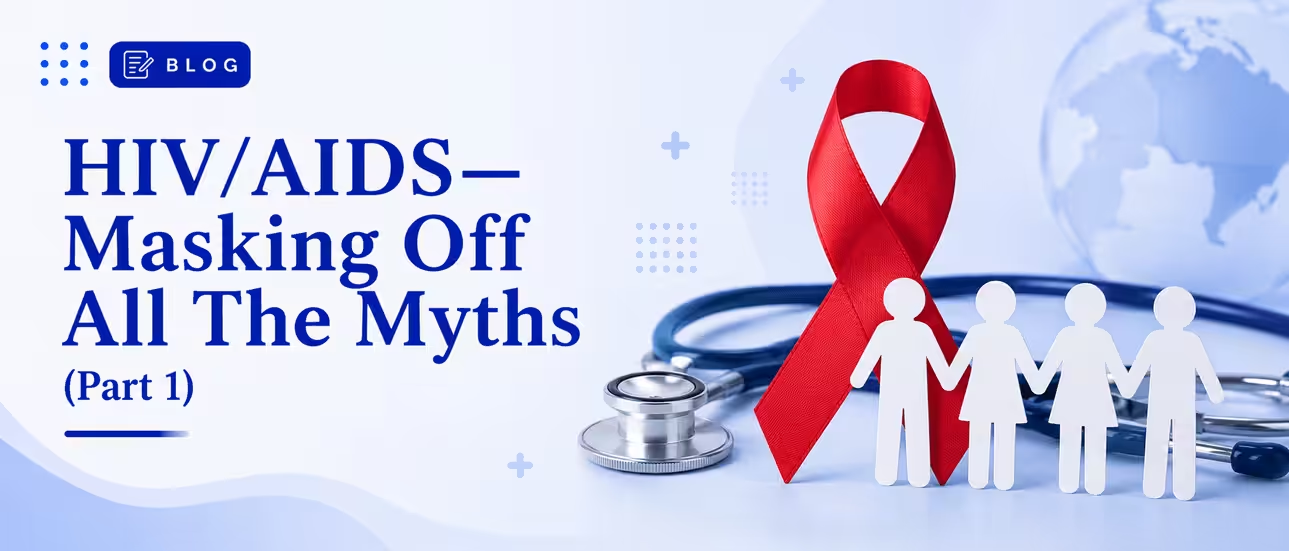
Table of Contents
Top Rated Post
“You don’t belong to the civilized society if you respect people who possess HIV/AIDS virus.”
Well, that’s the intensity of the sorry state we encircle around HIV-affected patients.
Prolly, we hate them despite a lack of knowledge relating to the same disease.
If you don’t share a friend’s scooter because he is HIV positive, or you don’t lend your tiffin box to him, you are an equal culprit for promoting an HIV/AIDS-phobic attitude.
So, before you establish unwanted and illogical notions about HIV patients, please skim through these myths.
HIV spreads through social contacts
It has to be one of the most disastrous beliefs coupled with HIV.
HIV can’t leap air, water, food, and social contact; instead, it transfuses to your body only by sexual application with the HIV-affected partner or milking your mouth from the affected breast.
So, whether you are enjoying dinner at KFC, or breathing in the same space dimension with the affected patient; whether you share the same eating utensils to sticking to the same office lavatory; you have zero risks of HIV.
Here’s the best part about these viruses— they don’t get into your body by shaking hands and kissing the partners either.
So, open up with the affected friends and family members, and spend your entirety with extreme normalcy.
If both the couples have HIV, there’s no need to use the protection
You may believe that since you are inching towards death due to HIV, there’s no point in using condoms.
While the idea sounds overwhelming and fascinating, there’s a possibility that you may lay yourself open to the HIV of your partner.
Couldn’t comprehend?
There are two types of HIV/AIDS conditions— HIV 1 and HIV 2.
While you have been on medical observance for HIV 1, sleeping with an HIV 2 virus patient without protection may radicalize your situation and alter the pharmacokinetics of the drug, thereby aggravating your medical condition.
Since the other virus may resist the action of the drug, you may infect yourself to a faster death.
HIV infection— a part of sex workers and not in everyday people
Earlier in the 1980s and 1990s, it was found that sex workers had severe trouble managing their lives— courtesy of HIV.
However, the government throughout the length and breadth of the globe has disseminated awareness regarding safe and precautionary sex.
Yes, people who engage in sexual polygamy and maintain a relationship with multiple-sex partners have a higher risk of developing HIV infection; however, it will be too harsh to associate the profession with the disease.
Any person who indulges in unprotected sex, exchanges blood through careless needling and shaving kit, or feeds on the infected breast fancy their chances of HIV/AIDS infection.
Death is the ultimate destination of HIV
A lot of books and movies have depicted the wrong notion skirting around HIV/AIDS infection, i.e., death is the only destination if you are suffering from the misery of it.
That’s utterly disgusting as it sucks out the courage of the patient, thereby preparing the aura of crematory proceedings.
Yes, you can’t get rid of HIV/AIDS once it steps into your circulatory system; nevertheless, you can control it with special medical assistance— the medicines that inhibit the virus replication by punching down the enzymes that create a favorable environment for them to multiply.
A lot of anecdotes off late prove that a person with HIV can lead a healthy controlled life without having to worry about the fate it may bring to your life.
HIV negative report suggests that you are impervious to HIV
While you have been blooming bonkers over the fact that you are HIV-negative, you may well discover yourself on the receiving end in the coming three months.
The best way to celebrate your HIV/AIDS-negative report is by waiting for another three months.
Although HIV tests are some of the most accurate tests, there’s a bleak possibility that it may turn positive.
Get it tested after three months for validating the fact whether your body didn’t produce antibodies against HIV.
Hold your horses to find interesting myths in the next section.
FAQs
1. What is HIV and how does it differ from AIDS?
HIV (Human Immunodeficiency Virus) is a virus that attacks the immune system. In particular, the virus targets the CD4 (T) cells that help the body combat infections. An untreated HIV infection leads to AIDS (Acquired Immunodeficiency Syndrome); AIDS is the end stage of the HIV infection process and involves a significant deterioration of the immune system. This deterioration puts the body at risk for opportunistic infections and certain types of malignancies.
2. How is HIV transmitted?
HIV is transmitted through unprotected sexual intercourse with an infected tissue donor, sharing of infected needles or syringes, passage of the virus from an infected mother to a child in utero or through breast-feeding, and blood transfusions with infected blood. HIV is NOT transmitted through contact activities such as hugging or shaking hands, or sharing eating utensils.
3. Can HIV be cured?
At present, there is no cure for HIV. Waever, the virus can be managed with antiretroviral therapy (ART) which involves the use of multiple antiretroviral drugs. ART decreases the body’s HIV viral load to an undetectable level. This allows these individuals to lead normal, healthy lives. It also eliminates the risk of these individuals transmitting the virus to others.
4. What are the symptoms of HIV?
Some symptoms of HIV can occur flu-like fevers, sore throats, fatigue, and swollen lymph nodes. It can take time for HIV symptoms to develop, and as time continues to flu symptoms can turn into more serious prolonged infections and potentially severe weight loss.
5. What are some ways I can avoid getting HIV?
Some ways to avoid getting HIV are the proper use of our prophylactic pregnancy prevention devices (condoms), limiting sexual partners, and getting screened frequently. One other measurable means for lowering our potential HIV risk, if controlled, is the regimen of Pre-exposure Prophylaxis.
6. Can people with HIV have a normal life?
Yes. People with HIV can have a normal life with balanced medical and lifestyle practices. It is necessary for people living with HIV to have formal medical care, a routine of consistent anti-retro viral therapy, and a network of people to help them.
How useful was this post?
Click on a star to rate it!
Average rating 4.7 / 5. Vote count: 100
No votes so far! Be the first to rate this post.



 Acne
Acne Allergy